Written by Gareth Walton on 3rd Mar 2026
We've been designing camping furniture at OLPRO for over thirteen years. In that time we've eaten off wobbly aluminium tables that fold in the wind, balanced mugs on grass because the table legs sank, and spent far too many evenings crouching over a table that's six inches too low.
A camping table isn't glamorous kit. Nobody posts about it on Instagram. But get it wrong and every meal, every card game, every morning brew is worse for it. Get it right and you barely notice it's there, which is exactly the point.
This guide covers everything we've learned: what types exist, which materials actually hold up, how to pick the right height (this one catches more people out than you'd think), and what to look for before you spend a penny.
Types of Camping Tables and Which Suits You
Not all camping tables do the same job. Here's what's actually out there:
Roll-Up Tables
The legs fold and the tabletop rolls into a compact tube shape. Light, packable, and quick to set up. The trade-off is stability, a roll-up surface flexes more than a solid one, so cutting food or playing board games can be frustrating. Best for backpacking and ultralight setups where every gram matters.
Folding Panel Tables
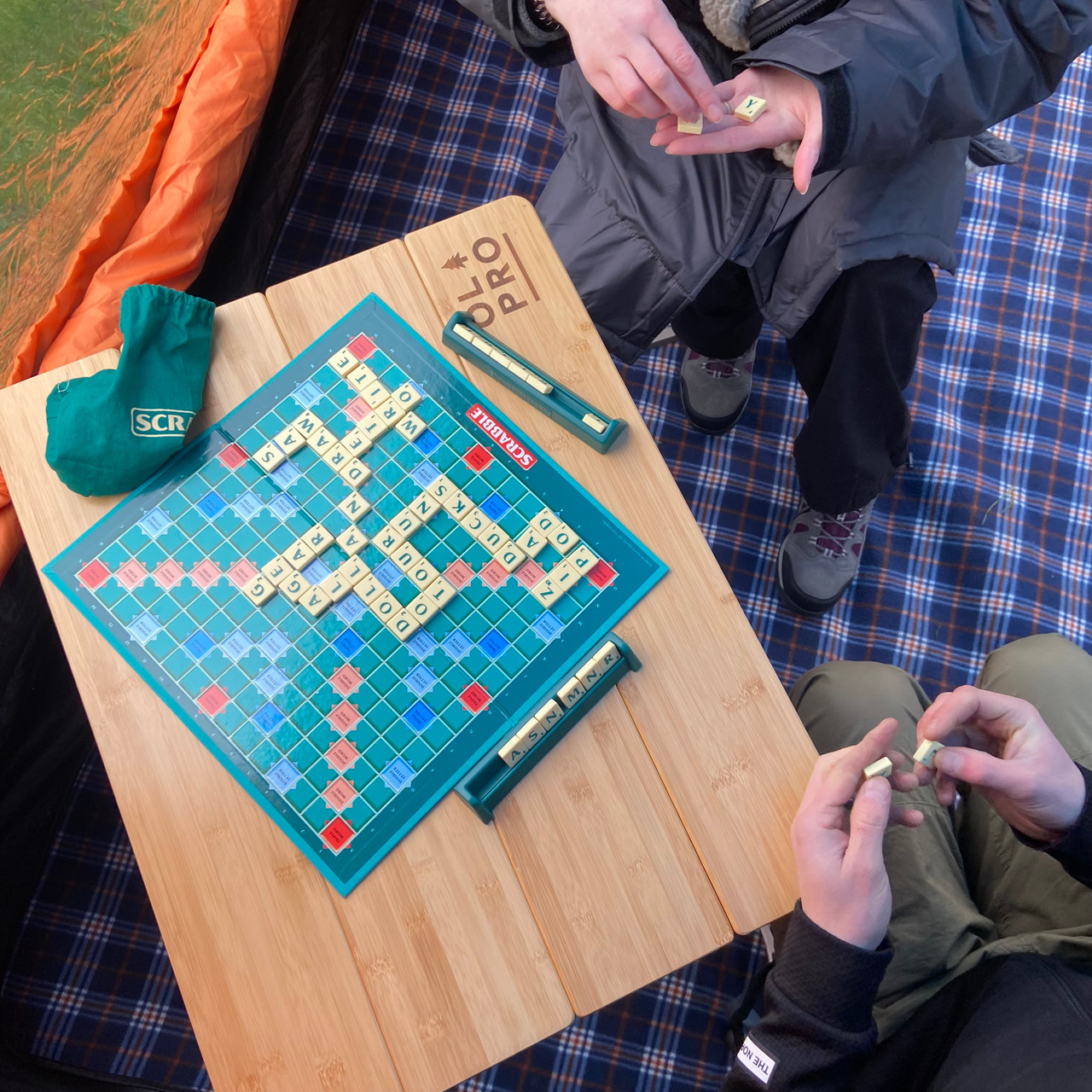
The tabletop splits into rigid panels (usually two or four) that fold flat, with legs that collapse underneath. This is where you get the best balance of stability and packability. The surface stays solid because each panel is rigid, and the whole thing packs down to roughly the size of a slim briefcase. This is the style we make at OLPRO, we use four bamboo panels with aluminium legs and a twin under-table brace for extra stability.

Suitcase / Fold-in-Half Tables
A single solid top that folds in half, with legs that tuck inside. Very stable once set up, but bulky to transport. You'll see these at car boot sales and village fetes as much as campsites. They're fine if boot space isn't an issue, but they're heavy and the folding mechanism can pinch fingers.
Camp Kitchen Stations
Part table, part cupboard, part worktop. These are standalone units with a raised cooking surface, shelving, and sometimes a windbreak. Brilliant for anyone who takes campsite cooking seriously, but they're larger, heavier, and pricier. We make several of these, including a bamboo camp kitchen with a side table that essentially gives you a full outdoor kitchen.

Side Tables and Spike Tables
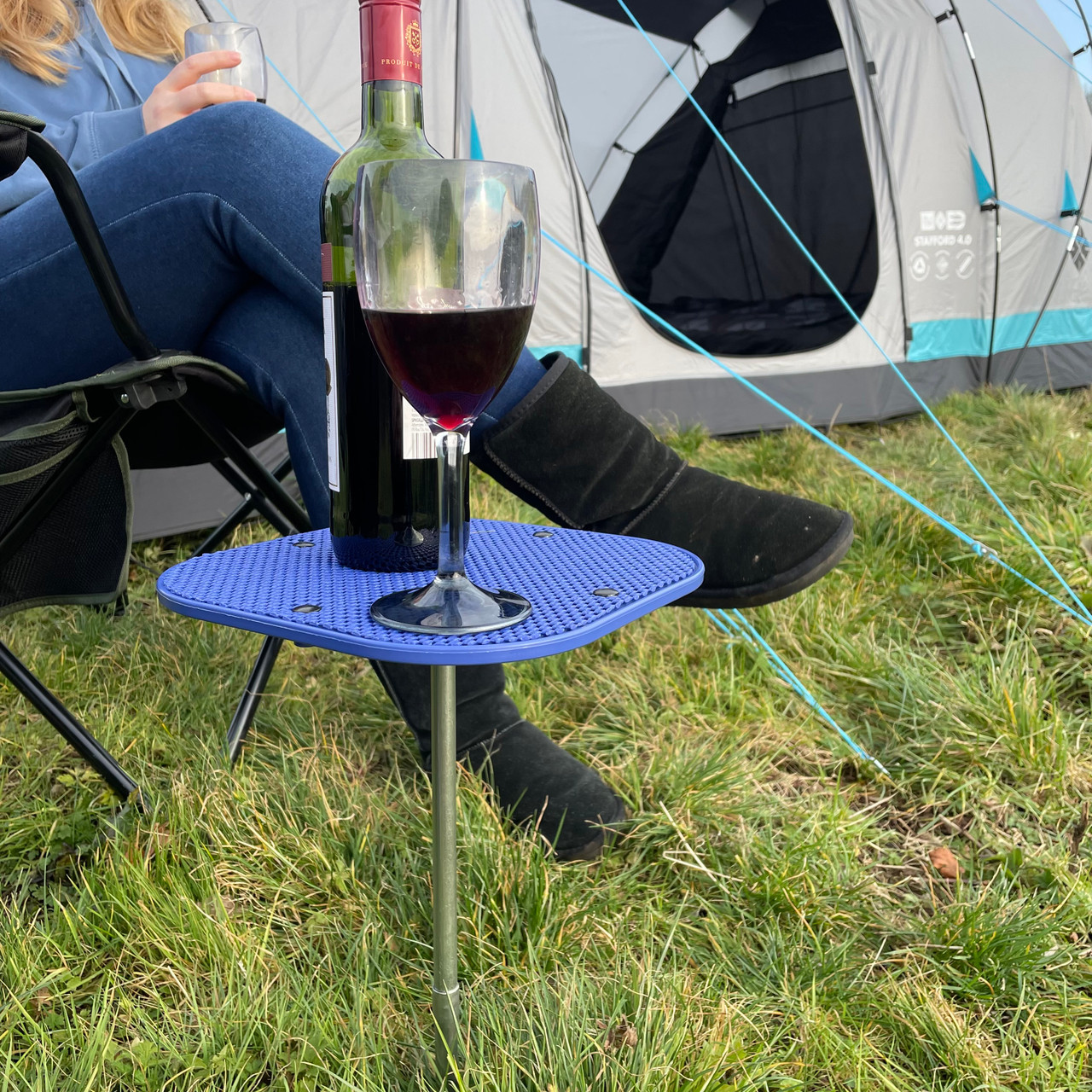
Tiny. A spike pushes into the ground and holds a small platform for your drink. Not a table in the traditional sense, but genuinely useful for keeping a mug off the grass next to your camping chair. Cheap, light, and surprisingly handy.
Not sure where to start?
A folding panel table in the 60–80cm range covers 90% of camping situations. It's stable enough for cooking and eating, compact enough for a car boot, and light enough that you won't dread carrying it from the car to your pitch.
How to Choose the Right Camping Table
Four things matter. Everything else is a nice-to-have.
1. Surface Size: Match It to Your Group
This is the single biggest decision.
A table that's too small means plates hanging off the edge, elbows clashing, and the sauce bottle living on the grass. Too large and it dominates your pitch and won't fit in the car. Our most popular table is the 80 x 60cm: it seats four without feeling cramped and packs down to 80 x 17 x 11cm.
2. Weight: Be Honest About How Far You'll Carry It
If you're car camping and your pitch is ten metres from the car park, a 10kg table is fine. If you're hauling gear across a field at a festival, it's not.
Our small bamboo table weighs 4kg, which is light enough that most people can carry it under one arm alongside a chair. The large 90 x 90cm table is 10kg: not something you'd want to carry far, but solid and stable once it's set up.
3. Stability: The Thing You Only Notice When It's Bad
A table that wobbles ruins everything. Look for:
A stable table has:
- ✓ Adjustable legs with locking mechanisms — essential for uneven ground
- ✓ Cross-bracing or under-table braces — stops lateral movement
- ✓ Non-slip feet — rubber or similar, not bare metal that sinks
- ✓ A rigid surface — folding panels beat roll-up for stability
We use a twin under-table brace system across our bamboo range specifically because we got sick of testing tables that rocked every time someone leaned on one side.
4. Pack Size: Will It Fit?
Measure your boot, your campervan storage, or whatever space you've got, then check the folded dimensions. Not the other way around. A gorgeous 90cm table is useless if it won't fit behind the driver's seat of your van.
What About Height? The Question Nobody Answers Properly
This trips up more buyers than any other spec, and most guides ignore it completely.
Standard Heights and What They're For
Your table surface should be roughly level with your elbow when you're sitting in your camping chair. Too low and you're hunching. Too high and you're reaching.
The problem is that camping chairs vary wildly in seat height: from 20cm beach chairs to 45cm high-back directors' chairs. So there's no single "correct" table height.
Our solution
Every OLPRO bamboo table is adjustable. The small and medium tables go from 43cm to 65cm. The large goes from 43cm to 70cm. You set it up, sit in your chair, and adjust until it feels right.
“We made our tables height-adjustable from day one because we'd seen too many people on campsites eating with their chin practically on the plate. One height doesn't suit everyone — it depends on your chairs, your awning clearance, even whether the kids are eating with you.
Bamboo vs Aluminium vs Plastic: An Honest Comparison
We make bamboo tables. You'd expect us to say bamboo is the best material. The honest answer is: it depends what you need.
When bamboo is the right choice
You want something that looks good, feels solid, and will last years. You're car camping or campervanning and weight isn't critical. You care about sustainability (bamboo is one of the fastest-growing plants on earth and our tables are made from treated, sustainably-sourced bamboo —which fits with our B Corp certification).
When aluminium is the right choice
Weight is your top priority. You're backpacking, bikepacking, or carrying gear a long distance. You need something cheap and cheerful that does the job without fuss.
When plastic or MDF is the right choice
You're on a tight budget and need a surface to eat off. It'll do. Just don't leave it out in the rain.
Our Range: OLPRO Camping Tables at a Glance
We don't make twenty tables. We make a focused range where each one serves a specific purpose.
If we had to recommend one
The Medium Bamboo Table at £95. It's our bestseller for a reason. Big enough for four people, light enough to carry in one hand, packs down small, and the height adjusts to suit any chair. It's the table we take on our own trips.
Every OLPRO table comes with a carry bag, our lifetime warranty, and free UK delivery.
Matching a Table to How You Actually Camp
The "best" table depends entirely on how you camp. Here's what we'd recommend for the most common UK setups:
Weekend car camping (family)
You've got boot space, you want something stable for meals, and the kids will lean on it, spill on it, and use it for colouring. Bamboo handles all of that.
Medium or Large Bamboo TableCampervan touring
It needs to fit in a van, come out quickly, and pack away just as fast. The adjustable height means it works both inside the van and outside.
Small Bamboo TableFestival camping
Keep it cheap and light. Festival camping is rough on gear, and you want something you won't be devastated about if it gets damaged.
Folding Camp Table or OLPRO ExtraExtended stays
If you're staying a week or more, comfort matters. A larger surface and proper storage transforms your setup.
Large Bamboo or 3-in-1 Table/CupboardCooking-focused campers
Cooking on a low dining table is miserable for your back — a dedicated cooking-height surface makes an enormous difference.
Bamboo Cooking Table (82cm)Can You Cook on a Camping Table?
Yes but with Caveats.
A camping table can absolutely hold your stove, chopping board, and prep. But there are a few things to get right:
Use a trivet or heat mat under any stove or hot pan: Bamboo handles heat well but a direct flame or red-hot pan base will mark any surface. Aluminium copes better with direct heat but can still warp under extreme temperatures.
Check the weight capacity: A single-burner stove with a pot of water, a chopping board, and ingredients can easily weigh 10-15kg. Our bamboo tables hold 30-50kg depending on size, which is plenty. Cheaper tables might not.
Think about height: Cooking hunched over a 50cm dining table is uncomfortable after five minutes. If you cook regularly at camp, a dedicated cooking-height table (our Bamboo Cooking Table sits at 82cm) saves your back. If you only cook occasionally, just raise your adjustable table to its highest setting.
Wind protection: A stove on a table catches more wind than one on the ground. Use a windbreak, or position the table with its broadest side against the wind. Never cook inside a tent or awning — carbon monoxide is a real and serious risk.
Safety warning
Never cook inside a tent or awning — carbon monoxide is a real and serious risk. Use a windbreak or position the table with its broadest side against the wind.
Looking After Your Table So It Lasts
Table care cheat sheet
After every trip
- Wipe down the surface with a damp cloth — no harsh chemicals
- Brush off sand or grit before folding — grit in the hinges accelerates wear
- Dry thoroughly before packing into the carry bag
Every season
- Check all hinges, locks, and leg mechanisms for wear or looseness
- Bamboo: a light application of food-safe mineral oil once a year
- Aluminium: check for sharp edges from dents and file them smooth
Storage
Store in the carry bag, in a dry place. A garage or shed is fine. The boot of your car for six months over winter is not — temperature swings and damp will shorten the life of any material.
FAQs
All OLPRO camping tables come with a carry bag, lifetime warranty, and free UK delivery.
Browse the full range →